
 |
 |
 |
 |
 |
 |

 |
 |
 |
From the Center for American Music Preservation (CAMP)
American Composers:
From The Colonial Era
To
Our Time
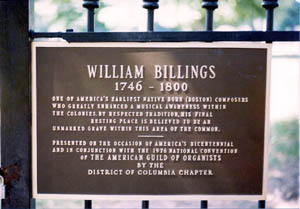
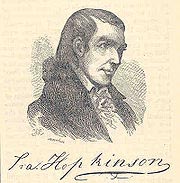
The 18th century
and the
Father of American Choral Music,
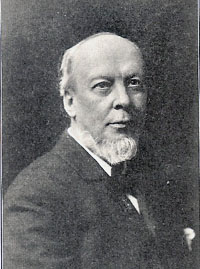
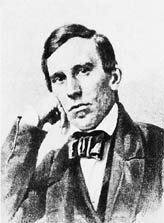
The 19th century
and
the composer of
the official U.S. Centennial cantata in 1876,
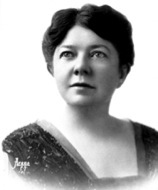
The 20th century
and
the Dean of American composers,
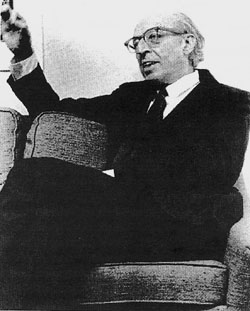
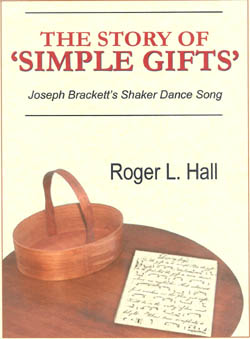
"Tis the gift to be simple" - Aaron Copland Meets The Shakers In Shaker Heights
Learn about the popular Shaker song and the only meeting between composer Aaron Copland and several Shakers in Ohio and the background on the popular Shaker dance song, "Simple Gifts."
Sign up to watch this free 50th anniversary Zoom program presented by musicologist, Roger Lee Hall,
on 7 November 2024 from 7:00-8:30 p.m.To register for this Free Zoom program click this link --
https://us06web.zoom.us/meeting/register/tZEpfu-urDkrEtfJ-ER6aR29XHG6DK5eNPLX#/registratio
Rare choral music by Charles Edward Ives
Order your copy of these early choral works by Charles Ives from the 1890s for your class or for personal enjoyment, performed in concerts by soloists and chorus of the Old Stoughton Musical Society, America's oldest surviving choral society, organized in 1786:
01: Chorus: "Turn ye, Turn ye" (1890)
02: Vocal Quartet: "Crossing The Bar" (1891?)
03: Chorus and Bass Soloist: "Easter Carol" (1892)
04: Soprano Soloist: "A Christmas Carol (1894)
To order any of these choral works sent directly to you by email attachment for $1.00 each,
click the "Add to Cart" below.

Contents
Earlier American Composers - A Survey in Sound
Composer-in-Residence on American Music Preservation.com
American Composers Resource Collection (ACRC)
American Classical Composers Web Poll
Recommended Music Books and DVDs

American Music Preservation.com is an educational site
which
receives no funding from outside agencies.
Please help keep this educational website online
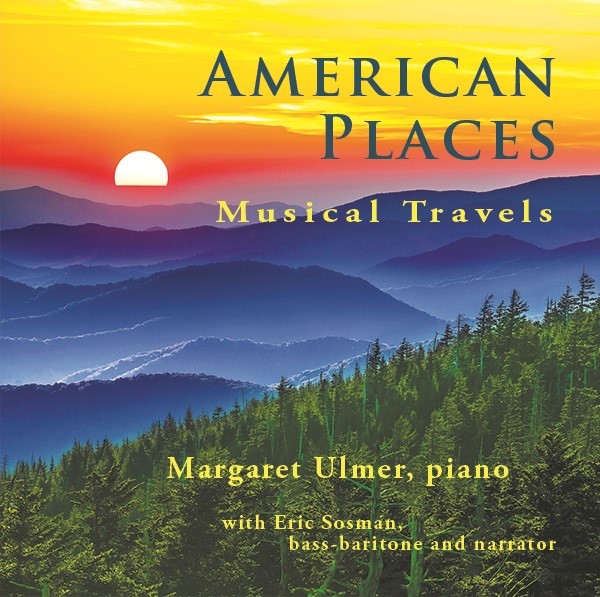
Order from this special limited edition recording...
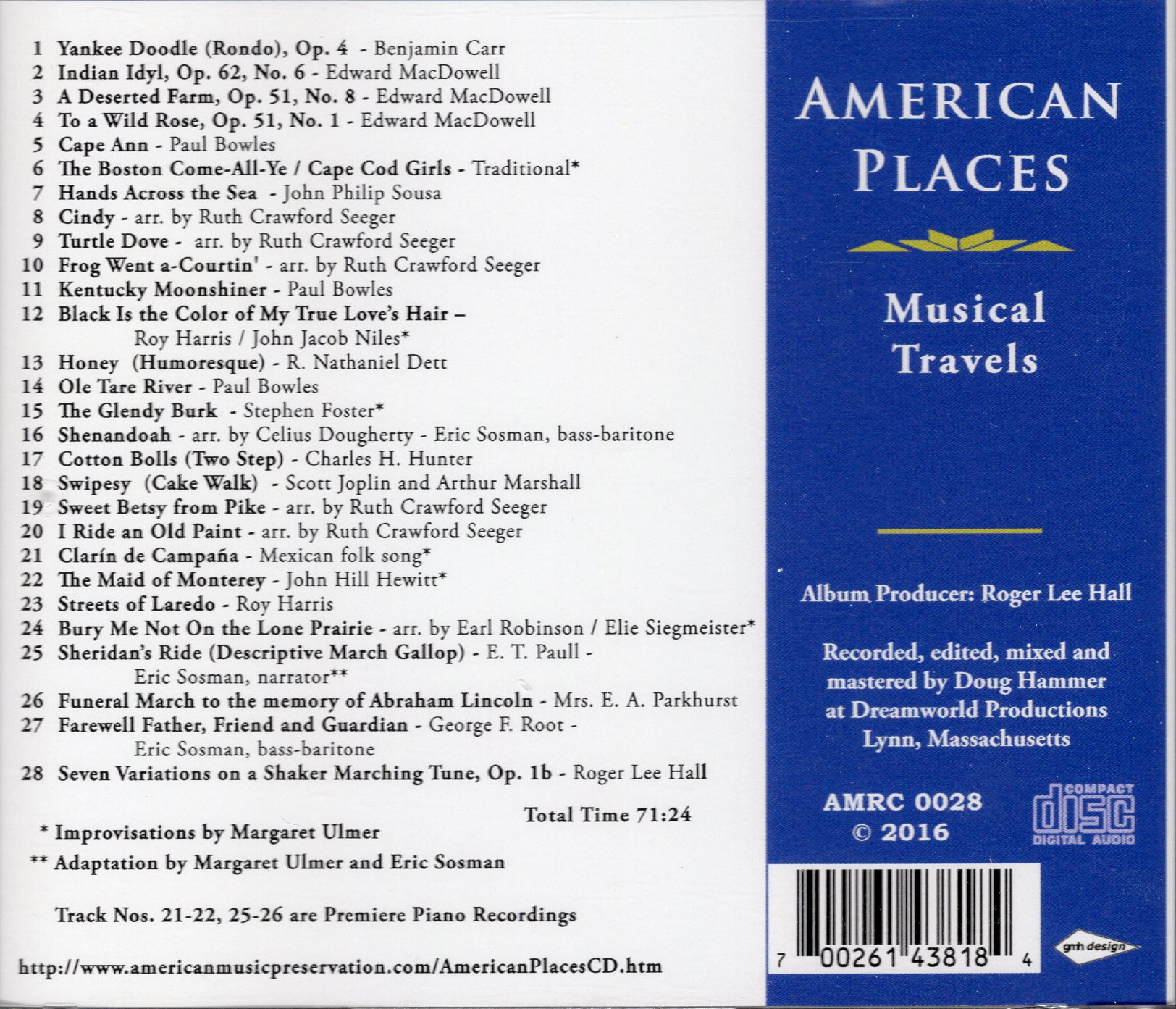
Read how to order individual audio titles of Americna music -- here
An ideal music collection
for teaching or study!
Earlier American Composers:
A Survey in Sound
From the American Music Recordings Archive (AMRA)
is a collection of music by 16 American composers
from the 18th century to early 20th centuries
with 50 total music examples
Read about the contents and
how to order AUDIO EXAMPLES
go here
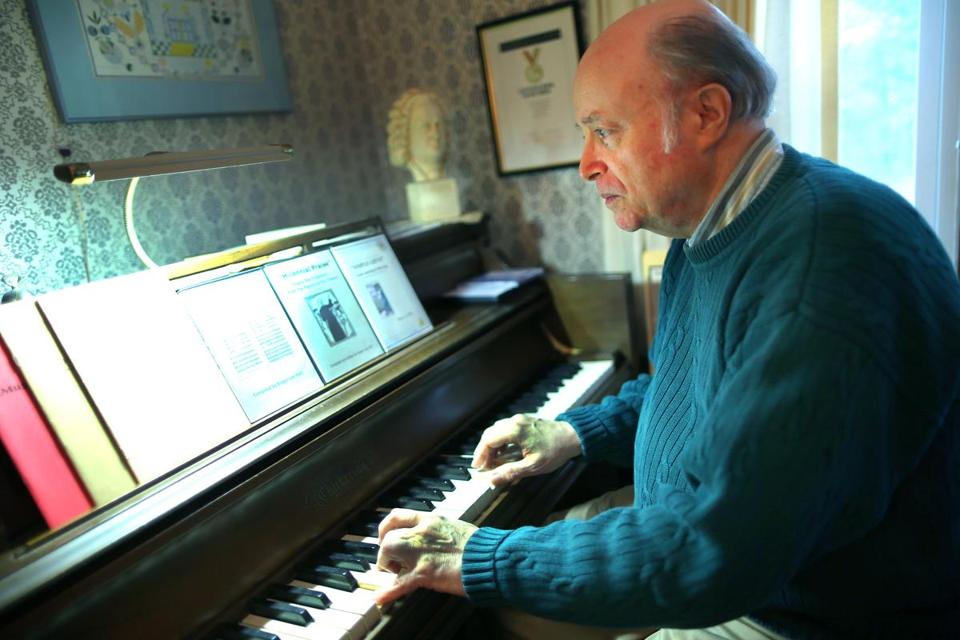
Composer-in-Residence
at
American Music Preservation.com
See the list of compositions
by ASCAP Composer, Roger Lee Hall -- click here
A new edition now available!
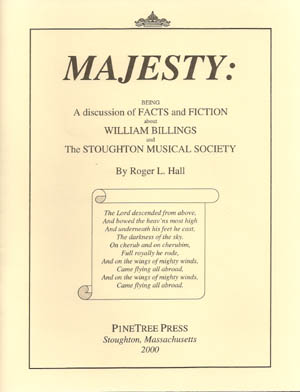
The new expanded edition of this book is now available.
This book includes the William Billings family genealogy and facts and fiction about Billings
and The Stoughton Musical Society. It also includes a 32 page Supplement with concert programs and other activities in Stoughton
especially the 1774 singing school taught by William Billingas, plus these texts and tunes of Billings:
Anthem: THE PLEASURES OF VARIETY- music:Roger Hall
Canon: COME LET US SING - music: Roger Hall
Fuging Tune: MAJESTY - music: William Billings
Hymn Tune: STOUGHTON - music: William BillingsSTOUGHTON has an appropriate 18th century text by Isaac Watts added by musicologist, Roger Hall, and it was premiered by the
Old Stoughton Musical Society during its Bicentennial Concert in 1986.
The PDF book is available exclusively here sent via email attachment.
To order your copy of the new 2nd edition of the book --go here
American Operas
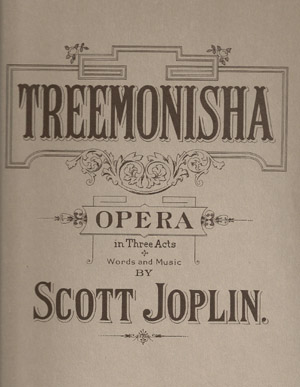
Scott Joplin's Opera
(published 1911)
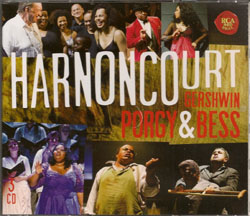
CD Review:
PORGY AND BESS - conducted by Nikolaus Harnoncourt (2009)
The Celebrity Composers
We live in a time when more emphasis is given to celebrities and that includes certain composers
who are receivers of this attention.
Over the past fifty years or so, most of the focus has been paid by record companies and conductors
to only a handful of American composers from the 20th century who might be called...
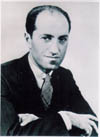
The Famous Five
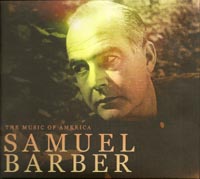
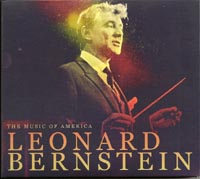
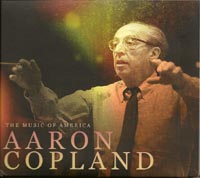
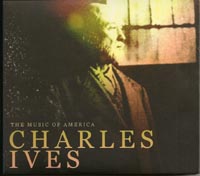
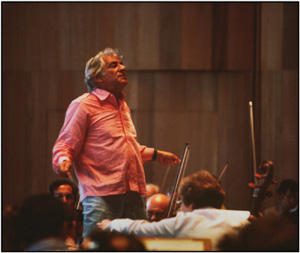
Leonard Bernstein - The Total Musician
article by Jeffrey Dane
The Overlooked OthersThere are other 20th century composers whose music
is available on recordings and here are just a few:
Amy Beach
These composers are sometimes overlooked by today's conductors and symphony orchestras.
Also, there are composers from the 19th century who deserve more attention.
Among them are these three composers, all born in the 1850s:George Whitefield Chadwick (1854-1931)
And two others as well:Dudley Buck (1839-1909)
Charles Tomlinson Griffes (1884-1920)Of course there are many more American composers who could be added to this list.
Among most classical record labels, there is a tendency to perform mainly music by "The Famous Five."
To help correct this deficiency, there is a need to encourage research and performances
of lesser known American composers and their music in colleges, universities and music schools.
Another way is to distribute information, such as on this web site.
See the list of 200 albums with music by many American composers
from the 18th, 19th and 20th cenrturies at the -- Essential American Recordings Survey
Have a look at the extensive catalogue of AMRC CDs
with music by many American composers -- click here
Is Samuel Barber's Adagio For Strings
really a "song"?
In his book, This Will End In Tears: The Miserabilist Guide To Music, Adam Brent Houghtaling
included a list at the back of the book with
"The 100 Saddest Songs."
The No. 1 title on this very strange list was Barber's Adagio For Strings, according to a BBC user poll in 2004.Now the question has to be asked -- is this piece of music really a "song"?
A song by definition has both words and music. This Barber piece has music only.
Many years after it was composed, Barber did add words to his poignant (that doesn't mean it's "sad") music and he
titled it, "Agnus Dei." But that is a choral piece and still not a song in the traditional sense. It is best classified as a sacred
chorus. That choral piece is not even mentioned in Houghtaling's book, though he does give a detailed description of
Barber's musical career and a listing of his major compositions.
So why then call it the "saddest song"?
That may be because of the association to its use in the 1986 film PLATOON.
In that context in the film it is played as a somber accompaniment to the horrible casualties of the Vietnam War.
There are also a few other classical pieces on the Top 100 list:
"Dido's Lament" by Henry Purcell (No. 14)
"Der Abschieb" (The Farewell) by Gustav Mahler (No. 26)
"Mille Regretz" by Josquin Des Prez (No. 34)
"Dies Irae" by Thomas of Celano (No. 46)
"Der Ldiermann (The Hurdy-Gurdy Man) by Franz Schubert (No. 61)
"Con Onor Muore (To Die With Honor) by Giacomo Puccini (No. 67)
"Adagio in G minor" incorrectly attributed to Tomaso Albinoni (No. 74)
"Cantus In Memory of Benjamin Britten" by Arvo Part (No. 79)
"Prelude in E minor" by Frederic Chopin (No. 85).A very odd assortment of classical pieces!
This is just another example at how misinformed many writers can be about music classifications.
So, in the final analysis, Barber's Adagio does not belong on the list of 100 saddest songs.
Will it be corrected in the next printing of the book? Probably not.
It will remain a "song" to the public who reads this book.
-- Roger Hall
A Few Recommended Music Books and DVDs...
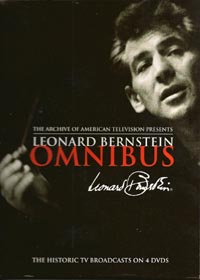
DVD: Leonard Bernstein and OMNIBUS television series, 1954 to 1958
DVD: OBSESSION: A Tribute to Bernard Herrmann by Roger L. Hall
Book: And They All Sang: Adventures of an Eclectic Disc Jockey by Studs Terkel
Book: For The Love of Music: Invitations to Listening by Michael Steinberg
and Larry RothelBook: George Gershwin: His Life and Work by Howard Pollack
Book: A Guide to Film Music: Songs and Scores by Roger L. Hall
Book: Hallelujah Junction: Composing an American Life by John Adams
CD Reviews
THE 18TH CENTURY AMERICAN OVERTURE (Steven A. Kennedy)
American Piano Concertos: Barber, Copland, Gershwin (Steven A. Kennedy)
HUNGARIAN SKETCHES and CELLO RHAPSODY -- music by Miklos Rozsa
(Steven A. Kennedy)JAZZ NOCTURNE: American Concertos of the Jazz Age (Steven A. Kennedy)
MOBY DICK and Sinfonietta -- music by Bernard Herrmann (Steven A. Kennedy)
PIANO MUSIC I: CIRCLES OF FIRE -- music of George Rochberg (S.A. Kennedy)
PORGY AND BESS (3 CD Set) -- music by George Gershwin (Roger L. Hall)
THE RED VIOLIN CONCERTO and PHANTASMAGORIA -- music by John Corigliano
(Steven A. Kennedy)
SERENADA SCHIZOPHRANA -- music by Danny Elfman (Steven A. Kennedy)SONGS IN TRANSIT - music by Tom Cipullo, Lori Laitman, Lee Hoiby, Melanie Mitrano,
Beth Anderson, Gene Pritsker, Allen Jaffe, Paul Moravec, David Del Tredici (Roger Lee Hall)
SYMPHONIES NOS. 5 and 6 and ACCELERATION -- music by Roy Harris
(Steven A. Kennedy)SYMPHONY in F# and MUCH ADO ABOUT NOTHING --
music by Erich Wolfgang Korngold (Steven A. Kennedy)VINTAGE AMERICA -- Callico Winds (Roger Lee Hall)
VIOLIN CONCERTOS -- Miklos Rozsa and Erich Wolfgang Korngold (Steven A. Kennedy)
Magazine Hall of Fame Survey
In the June 2011 issue of Classic FM Magazine published in the UK, out of the Top 300 Classical Works,
only 10 American classical works (excluding film soundtracks)
were chosen by its listeners and were on the so-called "Superchart" covering the years 1996 to 2011.
They are listed with survey numbers in reverse order:291: Candide (Leonard Bernstein)
270: Rodeo (Aaron Copland)
253: Piano Concerto (Philip Glass)
148: Violin Concerto (Philip Glass)
140: Violin Concerto (Samuel Barber)
139: Fanfare For The Common Man (Aaron Copland)
115: Appalachian Spring (Aaron Copland)
87: The Ashokan Farewell (Jay Ungar)
46: Rhapsody in Blue (George Gershwin)
11: Adagio For Strings (Samuel Barber)Four composers in The Famous Five were chosen by Classic FM listeners:
Barber, Bernstein, Copland and Gershwin.But why so few American works in this Top 300 Hall of Fame Survey?
Would the same results occur in an American published music magazine?
What would music scholars or conductors select as their favorite classical works?
Would they select many works by American composers?
Would you like to submit your list of favorite American composers?
Send your list to -- Hall of Fame Survey
Attention Researchers!
If you have researched music by an American composer from the past
and would like to submit a short essay or review of a recording, click on this link for the
Contact email -- click here
Related AMP Links
American Music Timeline
American Music Recordings Archive [AMRA]Essential American Recordings Survey [EARS]
New England Music Archive [NEMA]
New England Composer Series No. 1: William Billings
New England Composer Series No. 2: Supply Belcher
New England Composer Series No. 3: Edwin Arthur Jones
New England Composer Series No. 4: George Whitefield Chadwick
Twenty American Composer Anniversraies
Associate Links
If you have a website and would like to be listed as an Associate Web Link,
send all pertinent information to:
American composers
International Center for American Music (ICAMus)
The International Center for American Music (ICAMUS) promotes knowledge and appreciation of American music
and music making in the US. The Center maintains an inclusive orientationtowards musical life in the United States, from its beginning to contemporary time.
Significant attention is devoted to Early American Music.
The Organization focuses on the study of musical sources,
and on the unity and integration of research, teaching, performance and experimentation.
Society for American Music (Resources)
The mission of the Society for American Music is to stimulate the appreciation, performance,
creation and study of American musics of all eras and in all their diversity,
including the full range of activities and institutions associated with these musics throughout the world.



Please remember to credit this website!
If you use any information from this web site
for a class or for a publication,
please give credit to the
Center for American Music Preservation (CAMP)
For any questions write to:
© 2010-2026 PineTree Publications. All Rights Reserved. Contact: pinetreepro@aol.com