
 |
 |
 |
 |
 |
 |

 |
 |
 |
New England Song Series No. 1
"Father And I Went Down To Camp"
The Boston Yankee Doodle Ballad
The tune now known as 'Yankee Doodle"
is shrouded in mystery.How and when was it written?
It has been claimed by many places at different times,
including such countries as England and Holland.
The tune became known in Colonial America
after it was sung by The British Grenadiers and others
from England.
Though not the first version of the song in Colonial America,
The author of the words to the song as it relates to
the American Revolution has been identified.
First verse with Chorus
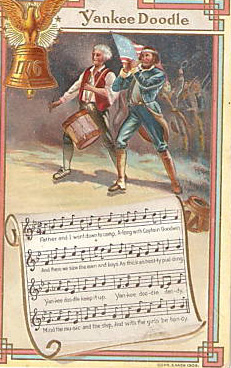
Father and I went down to camp,
Along with Captain Gooding,
And there we see the men and boys
As thick as hasty pudding.Chorus:
Yankey doodle keep it up,
Yankey doodle dandy;
Mind the music and the step,
And with the girls be handy.
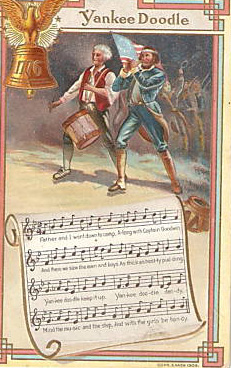
These opening words are the beginning of one ofthe earliest known versions and written during the American Revolution.
The song known as "Yankee Doodle" has been shrouded in legends for
several centuries and it is difficult to determine which versions are authentic.
Perhaps the most common legend is that a British Dr. Richard Shuckburghwrote a ballad text to the "Yankee Doodle" tune which appears to have come
from England to poke fun at thosewho had served in the French and Indian War in Canada
He was not very kind to the New Englanders or "Yankees"
as they were then known.
As mentioned in David Hackett Fischer's extensive discussion on
"Yankee Doodle" in Liberty and Freedom,
there are conflicting documents that
support this claim though he assumes
that Dr. Richard Shuckburgh wrote the words
including an nasty reference
to Dr. Joseph Warren, who wrote the words to
"The New Massachusetts of Liberty" (aka: "Free America")
and died at the Battle of bunker Hill.
Are there any documents that can prove that "Yankee Doodle"
was written down?
Yes, there are several.
One of these documents is sheet music published in London,
titled:
"YANKEE DOODLE, or
(as now christened by the Saints of New England),THE LEXINGTON MARCH."
This is undated but must have been printed after
the battles at Lexington and Concord in 1775.
This version was meant to ridicule the "Yankees"
and the words are raw and humiliating,
Here is the first verse:Brother Ephraim sold his Cow and bought him a Commission,
And then he went to Canada to Fight for the Nation;
But when Ephraim he came home he proved an arrant Coward,
He wouldn't fight the Frenchmen there for fear of being devour 'd.
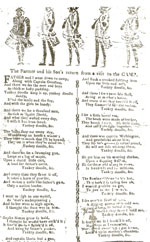
But perhaps the most popular version in the Colonies was
from a broadside sheet probably printed
in Boston with fifteen verses of text.
In his book, America's Song: The Story of 'Yankee Doodle,'
Stuart Murray mistakenly claims
this Boston version of "Yankee Doodle" as being written by Dr. Shuckburgh.
That is incorrect. This Boston ballad has this heading:
The Farmer and his Son's
return from a visit to the CAMPIn her book, Music for Patriots, Politicians and Presidents (1975),
Vera Brodsky Lawrence wrote this about the ballad:
Attributed to Edward Bangs. a sophomore at Harvard who had
served at Lexington as a minuteman, these words --with slight
variations -- were often reprinted during the later eighteenth and
early nineteenth centuries.
The broadside, probably dating from 1776,
is the earliest known printing of this version
on a broadside sheet without the tune.
Here are five of the fifteen verses of this ballad
Father and I went down to camp,
Along with Captain Gooding,
And there we see the men and boys
As thick as hasty pudding.Chorus:
Yankey doodle keep it up,
Yankey doodle dandy,
Mind the music and the step,
And with the girls be handy.And there we see a thousand men,
As rich as 'squire David,
And what they wasted every day,
I wish it had been saved.Chorus:
Yankee doodle etc.And there was Captain Washington
And gentle folks about him,
They say he's grown so tarnal proud,
He will not ride without them.Chorus:
Yankee doodle etc.And there we see a swamping gun,
Large as a log of maple,
Upon a deucid little cart,
A load for father's cattle.Chorus:
Yankee doodle etc.And every time they shoot it off,
It takes a horn of powder,
And makes a noise like father's gun,
Only a nation louder.Chorus:
Yankee doodle etc.
L
mac
aroni.
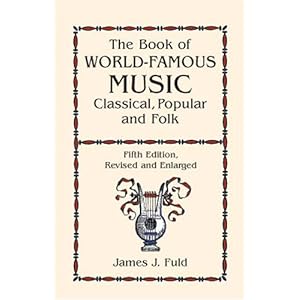
According to James J. Fuld's The Book of World Famous Music,
the earliest known printing of the best known words
to "Yankee Doodle" relating to
"pony," "feather in his cap," and "macaroni"
are from James Orchard Halliwell's,
The Nursery Rhymes of England (London, 1842).
So that is NOT the original text.
Though it may not be the best known
version today, the Boston Yankee Doodle balladwas perhaps the best known in early America.
It was written by Harvard College sophomore student,
Edward Bangs (1758-1818).
He graduated from Harvard in 1777and later worked as an attorney
in Worcester, Massachusetts.
As a college student, he wrote a simple ballad about a
farmer and his son as they "went down to camp"which was printed on a broadside sheet
and distributed around the Boston area and elsewhere
in the American colonies.
Now Edward Bangs and his patriotic ballad
are part of American musical history
as his chorus said in jovial jest:
"Mind the music and the stepAnd the girls be handy."
--by Roger Lee Hall
Director, Center for American Music Preservation (CAMP)
Hear four of the fifteen verses to
the Boston Yankee Doodle ballad
in a choral arrangement by William Arms Fisher
performed by
The Old Stoughton Musical Society Chorus
conducted by Earl Eyrich in a 1982 concert
titled,
"Music of George Washington's Time"
To listen to
Boston Yankee Doodle ballad -- click here
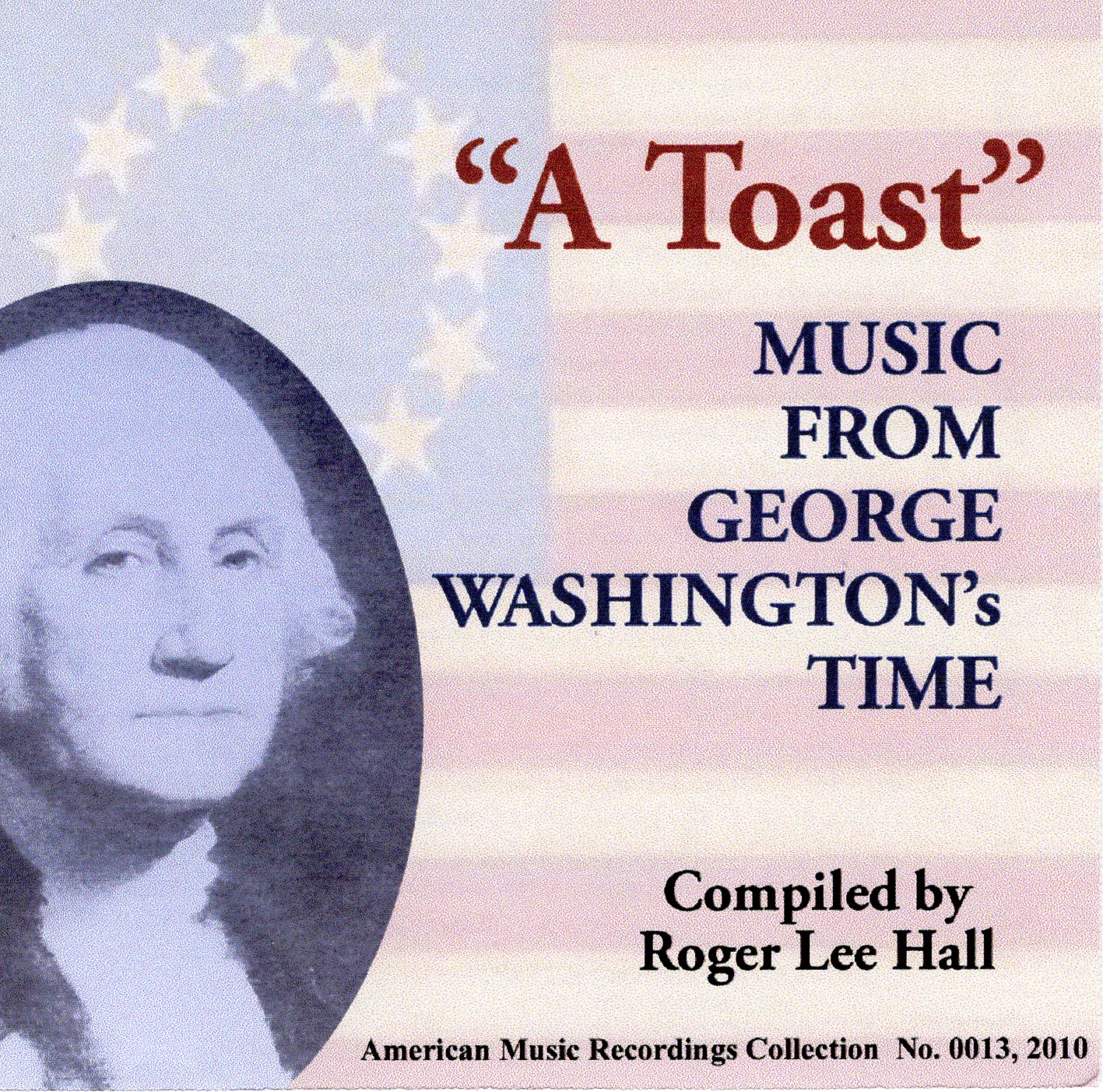
Much of the music from this 1982 concert
as well as a portion of the address
given by Roger Lee Hall
about George Washington
and Austrian composer, Franz Joseph Haydn
and included on this AMRC CD
Order your copy of
Four Patriotic Early American Songs
1. THE LIBERTY SONG -
John Dickinson ,17682. The New MASSACHUSETTS
Liberty Song -
Dr. Joseph Warren,17703. FATHER AND I
WENT DOWN TO CAMP
(Yankee Doodle) -
Edward Bangs, 17764. CHESTER
William Billings, 1778
New words by
Philip Doddridge, 1786To order your copy of these 4 songs
click this link:
The References
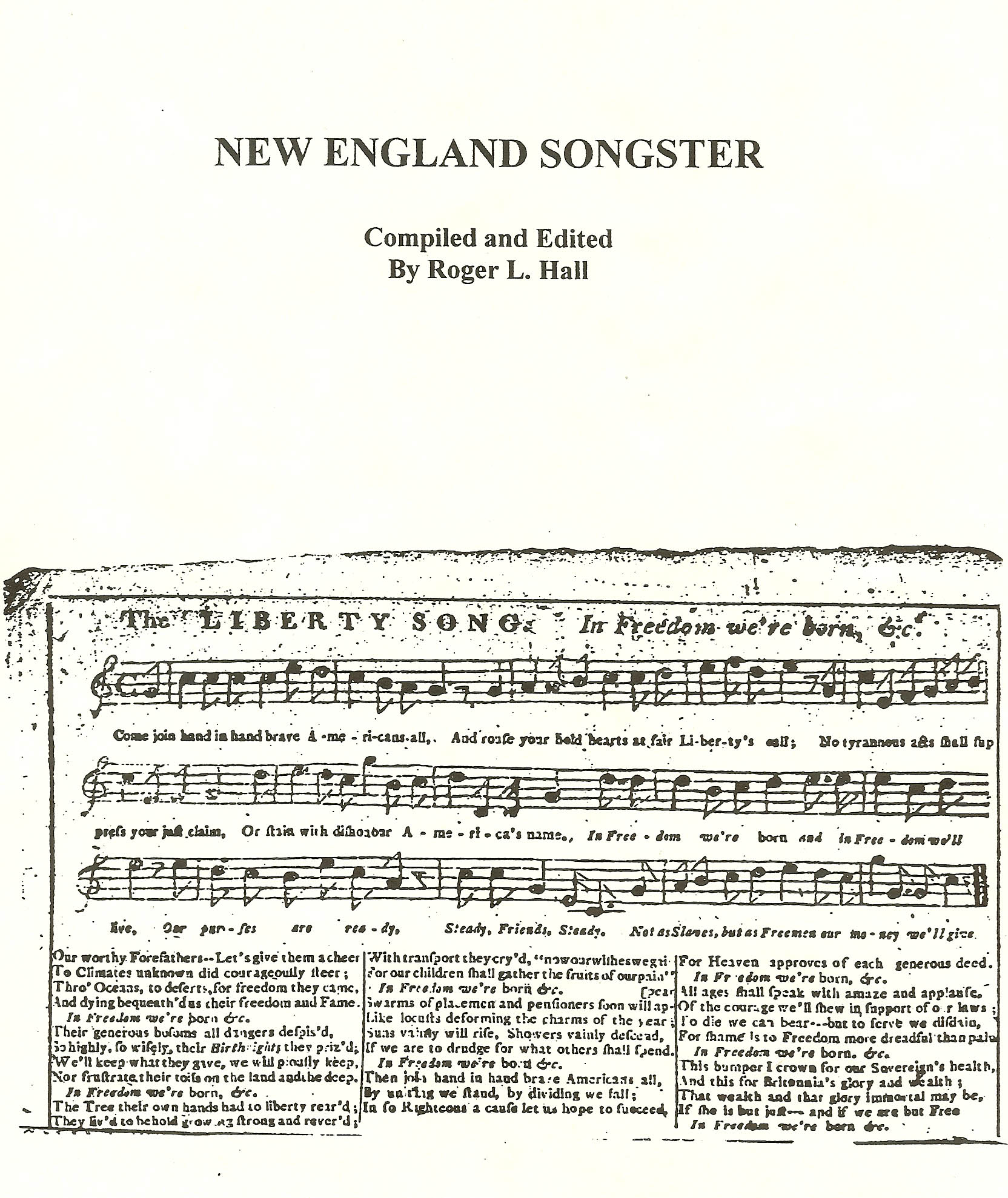
NEW ENGLAND SONG SERIES (NESS)
Song Series No. 2:
SIMPLE GIFTS (Tis the gift to be simple)
Song Series No. 3:
ONE HORSE OPEN SLEIGH:
The Story of "Jingle Bells"Song Series No. 4:
Song Series No. 5:
SONG OF THE OLD FOLKS:
(Tune: Auld Lang Syne)Song Series No. 6:
GOIN' HOME:
From Bohemia to Boston
isten





Help support the educational mission of the
Center for American Music Preservation
Order music titles from this AMRC recording
"Yankee Doodle" - An American Song Treasury, 1620-1920
AMRC CD 0009
See also the music collections available at the

© 2025-2026 PineTree Productions. All Rights Reserved for original material on this website.
Contact: pinetreepro@aol.com