Song writers
Early Elvis
Cowboy Songs


Early Elvis


Facts and Fiction

about

Elvis Presley Music

during the 1950s


If you use any of the information on this page,

please give credit to Early Elvis at

American Music Preservation.com

Thank you.


Powered by WebRing.


NEW!

75th Anniversary Commemorative eBook

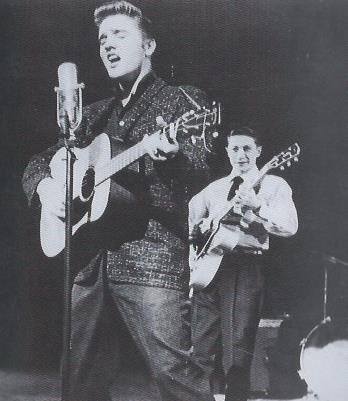
[this picture not to be reproduced unless permission is obtained]

In celebration of the 75th anniversary of the birth of Elvis Aron Presley
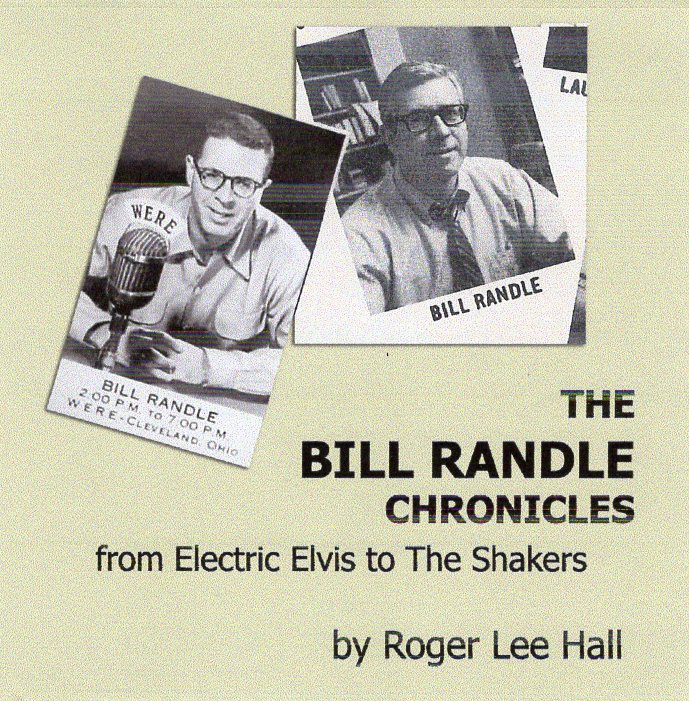
(born: Tupelo, Mississippi, 8 January 1935) now you can receive a new eBook with 75 files about the early music career of Elvis and Cleveland disc jockey and promoter, Bill Randle.

The author, Roger Lee Hall, worked as Randle's assistant in the 1970s
and he provides information about the famous still unreleased film short with Elvis performing titled, The Pied Piper of Cleveland: A Day in the Life of a Famous Disc Jockey.

Also in the eBook are picture galleries and audio files from radio and TV
about the early music career of Elvis and Randle during the 1950s.

This eBook is available exclusively on CD-ROM and includes rare and fascinating material including audio files not available elsewhere.

The eBook is titled:

"Shake, Rattle and Roll" - Electric Elvis and Bill Randle

To receive your copy of this Special Commemorative eBook, go to:

Early Elvis in Cleveland


Contents


A Songwriter Remembers Elvis

Was Elvis Really "The King"?

Elvis and The Pied Piper of Cleveland NEW!

CD Tributes and Recommended Recordings

No. 1 Hits in the 1950s

The Best Elvis Record Ever NEW!

The Truth Behind "Love Me Tender"

Elvis on Television

Elvis at Christmas

Recommended Elvis Links


DVDs

There have been numerous DVD documentaries about the life and music career of Elvis Presley,
some good and some bad.


Here's a bad one...

This 2 DVD set is poorly edited with bad sound and fuzzy images, especially the TV appearances.

The narration is fine and at least most of the songs are complete.

But don't expect great quality even with over 3 hours about Elvis.

You can read more at this link:

ELVIS COMPLETE: KING OF ROCK 'N' ROLL (Special Edition)


Now for a good one...

Elvis Presley:Memphis Flash


Documentary about early years of Elvis in Tupelo and Memphis and including interviews with authors Elaine Dundy and Alanna Nash, DJs George Klein and Wink Martindale, Historian Roy Turner, several Elvis friends from his youth. Also excerpts from early Elvis songs.

This fascinating DVD is recommended for your collection.

Elvis - The Memphis Flash


A Songwriter Remembers Elvis

Songwriter Roger Lee Hall was a big fan of Elvis from the time when he first became a national sensation in 1956. Roger also was a fan of the early Elvis movies, especially KING CREOLE, and here he is holding the soundtrack LP album from that movie in this 1958 photo:


Roger has written about his fondness for the early Elvis singing style and how it inspired his songwriting career in the chapter:

"Love Me Tender"-- Electric Elvis and Me

The remainder of the eBook tells the story of a struggling songwriter and includes
over 100 pictures and rare audio files, including several of Roger's early songs.

The eBook is titled:


Free As The Breeze:
Confessions of a Struggling Songwriter


Also available is a CD including Roger's radio shows featuring an Elvis memorial tribute:

Songs of Survival:
A Musical Scrapbook


In January 2010, he would have been 75 years old. Sadly, he never made it to his 43rd birthday.

Some fans may prefer to talk about the Las Vegas style lounge Elvis in the 1970s. Others may prefer his leaner years and his movies of the '60s. Still others prefer his early years in the '50s.

Whatever the decade, one thing is clear. Elvis was one of the greatest and most popular entertainers of his time.

And with all the gossip and rumors flying about, now is a good time to set the record straight about a few things concerning Elvis, his music and his image.

Starting off with this provocative question....


Was Elvis Really "The King"?

Elvis 56


Well, millions today give him that title -- Elvis, The King of Rock n'Roll, just as Michael Jackson is now called The King of Pop, a bogus title since Jackson was not the traditional "pop" singer.

But Elvis hated being called "The King."

He said simply: "I'm not a King. Jesus is King. I'm just a singer."

And what a singer he was!


In the beginning...

Elvis was a huge sensation from 1956 onward but he wasn't the first one to be called: "The King of Rock n' Roll."

That title was given to popular disc jockey Alan Freed who had popularized the "rock n' roll" term. But it is better to call Freed "The Father of Rock n' Roll" since he helped to popularize the term which had already been used in black or so-called "race" music.

Why is the title of "King" given to Elvis today? It was given to him especially after his death in 1977 when there was a tremendous growth in his popularity and a commercialism of his image far exceeding his later years of popularity. Just look at all the Elvis impersonators and stuff available today: over 1,000 books, countless magazine tributes, videos, DVDs, audiotapes, EPs, LPs, and CDs, and much more.

He was given the title of "King of Rock n' Roll" because of his superstar images from his hit records, television appearances, many movies, and live shows.

It was his first appearances on television that first established his fame, and later also the movies, especially the early ones like Jailhouse Rock and King Creole (Elvis' favorite film). These films and television programs were watched by millions of people all over the world.

Yet it's the music Elvis recorded and performed that matters the most.

Over his career Elvis had the most charted records and most Top 10 hits of any singer.

But Elvis wasn't the first rock n' roll sensation. There were the black R&B artists like Big Joe Turner, Little Richard and others.

Also, don't forget about Bill Haley & His Comets -- the white group that established rock n'roll with hit songs like "Rock Around the Clock" and "Shake, Rattle and Roll" (sung by Elvis on his national television debut in January 1956).

Elvis was a fan of Bill Haley and met him several times over the years. Elvis performed with Bill Haley for a never released movie short produced by Celevand disc jockey, Bill Randle in 1955.


The 1960s

During the 1960s Elvis continued to make movies but let his popularity slip away to the British groups like the Beatles and Rolling Stones. He still recorded some likeable songs for his films, especially from 1961 to 1964, like the beautiful "Can't Help Falling in Love" from Blue Hawaii and the energetic "Return to Sender" from Girls, Girls, Girls!

But some of his movie songs were just plain duds, like "Do the Clam" and "Song of the Shrimp." Elvis didn't like those silly movie songs but went along with singing them for his millions of fans.

By the time he regained some of his earlier attraction with the '68 Comeback Television Special, his voice had lost some of its expressiveness that he had in his early years.

Yet his popularity soared after the '68 Comeback show. He went back to performing live shows and hordes of fans flocked to see him everywhere he performed.


The 1970s

Unfortunately, as time went on, he looked more and more like a bad Elvis impersonator, especially with his garish capes and flashy jumpsuits. Even so, he continued to make some good recordings, like "Suspicious Minds" and "In the Ghetto."

But by 1977, he had become bloated and overweight and had lost a lot of his incredible vocal power.

Just listen to "Way Down" (his last record) on Elvis 30 #1 Hits -- the best-selling CD released for the 25th anniversary of his death. At this point in his life, he was feeling that way... he was "way down" with feelings of depression and taking massive doses of the "medications" he was prescribed by his unethical doctor.

When he died on 16 August 1977, he ended a roller coaster career which had been run into the ground in the last years by his selfish and exploitive manager, Col. Tom Parker. What did him in were several things: his blind allegiance to Col. Tom Parker; his medication abuse and excess weight; and also the loss of his mother's advice -- she had died in 1958.

For much of his late career, he seemed to be living like a Greek tragedy and was ultimately destroyed by his own personal failings.

But let's not end the tragic Elvis drama there. We need to return to...


The 1950s

I believe it was the years from 1955 to 1960 were when Elvis made his best recordings and best movies.

It was during those years that his singing style was set, based partly on other singers he admired. Besides rhythm & blues singers like B.B. King and Rufus Thomas, and gospel singers like Jake Hess, there were also pop and country singers that Elvis liked, including these: Mario Lanza, Dean Martin, Red Foley and Hank Snow -- Elvis was a featured singer in Hank's hillbilly shows, where Col. Tom Parker first noticed him.

But more than any of these singers, Elvis was a distinctive singer on his own and sang all types of music: love ballads, blues, uptempo rock n' roll, country music, movie songs, and gospel hymns (his favorite).

He is the only singer now in the Hall of Fame for Rock n' Roll, Country Music, and Gospel Music.

During the 1950s he went from the raw young "Hillbilly Cat" to the more mature "Media Star" status.

It seemed like everyone was tuned in to the Elvis channel during the 1950s.

In those long ago days he made it on one major asset -- his ability to sing and record songs with his unique blend of sincerity and strength. His singing was based on his Southern roots and his terrific ear for finding the right music

Elvis was the most iconic singer of the rock n' roll generation. He was also fortunate to have some very good songwriters and arrangers working on his songs. His records remain today as milestones of a memorable decade in popular music.

When he went into the US Army in 1958 some said he would be washed up. Elvis was afraid that might happen. Yet two years later, when he returned from being stationed in Germany, he had lost none of his appeal.

"Elvis is Back! " the LP album proclaimed -- and it turned out to be one of the most impressive albums he ever made, even though the sales were far below other Elvis albums. That same year of 1960, he appeared on television with Frank Sinatra -- the old crooner and the young rocker singing together for their first and only time. Elvis sang two of his latest songs: "Fame and Fortune" and "Stuck on You" (No. 1 and his first Stereo release). The Sinatra-Presley duet on "Witchcraft" and an uptempo version of "Love Me Tender" was awkward, yet it illustrated that Elvis could attract a larger and more diverse audience. Yet he never again shared a television special with another featured singer.

By July of 1960 he had another No. 1 hit, a song that Elvis himself thought was maybe his best recording: "It's Now Or Never." This song, with English lyrics by Aaron Schroeder and Wally Gold, was based on the popular Italian song "O Sole Mio," which Elvis had heard Mario Lanza sing in Italian. Elvis had also heard an earlier record by Tony Martin titled, "There's No Tomorrow." The Elvis record of "It's Now Or Never" stayed at the No. 1 spot in the USA for five weeks and eventually sold over 20 million dollars worldwide, making it the largest selling single of his entire career.

In November, Elvis had another hit waiting in the wings: "Are You Lonesome Tonight?" with sales over 2 million. This song was the only one suggested by Col. Tom Parker since it was a favorite song of his wife.

Elvis also made two very different films:

G.I. Blues -- a fond look back at his Army days in Germany. This became one of his best-selling soundtrack LP albums, which remained on the Billboard chart for 111 weeks -- an amazing achievement! The songs include these: "What's She Really Like"; "Big Boots"; "Pocketful of Rainbows"; and "'Doin the Best I Can"; also borrowed songs: "Blue Suede Shoes"; "Tonight Is So Right For Love"; and "Wooden Heart" (based on a German folk tune).


Flaming Star/Wild in the Country/Follow That Dream


Flaming Star -- with a terrific title song and one of his best acting performances.


During the 1950s, he was raw and rebellious and hypnotic to watch. Most fans seem to prefer his uptempo songs of that decade, like "All Shook Up" or "Jailhouse Rock. " But I prefer his great love ballads, like "Loving You" and "Don't" (one of his most intensely emotional ballad recordings) .

The "Loving You" song was the title of his second film and the first one in color. It was released in 1957. The single from the film, "Teddy Bear"/"Loving You," became the eighth million-selling record for Elvis and remained at the No. 1 spot for seven weeks in the US, and reached No. 2 in the UK. This is the first film which showed that Elvis could really act and was also his first great film soundtrack album, originally released as a series of EP records by RCA. The remastered CD has all the songs from the film, plus extra songs like the heartbreaking "I Need You So"; and the controversial song, "One Night of Sin," which couldn't be played on the radio because of the suggestive lyrics.

This soundtrack album is vastly underrated and deserves more appreciation because it set the pattern for all the Elvis soundtrack albums that would follow...


Loving You soundtrack


The best collection for these early years is the superb 5 CD set with 140 tracks that's essential for any Elvis collection:

Elvis - The King of Rock n' Roll: The Complete 50's Masters

You might ask -- which music did Elvis prefer?

Well, let's look at...


His Favorite Music

The favorite Elvis recordings are not fast uptempo songs nor the slow ballads.

What Elvis preferred was gospel music.

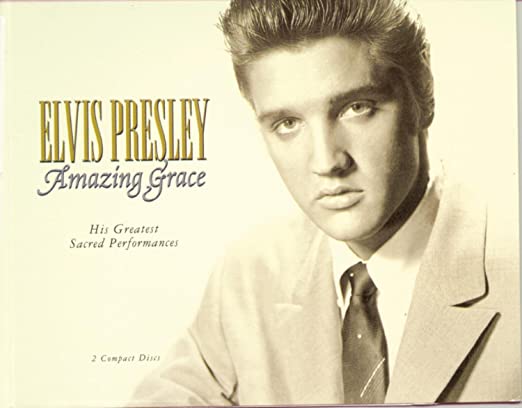
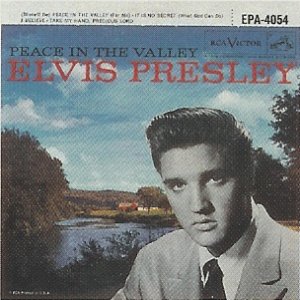
He poured more effort into the gospel recordings, with songs like "(There'll Be) Peace in the Valley" and "His Hand in Mine" -- included on the excellent 2 CD set: Elvis Presley - Amazing Grace: His Great Sacred Performances.


You can read about this favorite music of Elvis in a wonderful book honestly written by Joe Mosheo, a member of The Imperials, one of the backup groups for Elvis. The book is titled:


The Gospel Side of Elvis Presley


Joe Mosheo was also one of the producers of the excellent 2 volume DVD collection:

He Touched Me: The Gospel Music of Elvis Presley


The Elvis Legacy

Whatever kind of music he sang, Elvis put everything he had into it.

His Sun Record sessions and then the RCA Records ones from 1954 to 1960 -- those were his best years as a recording artist.

At that time, he lit up the world like a beacon of blazing brightness.

Should he be called "The King" for that? You may wish to call him that.

But because of his hypnotic live performances and records during the 1950s, I prefer to call him

"Electric Elvis"


Long may Electric Elvis sing on!


--Roger Lee Hall, August 2007


Note: Some of the information used in this article was gathered from these books:

  • Elvis: Day By Day by Peter Guralnick and Ernst Jorgensen (Ballantine Books, 1999).
  • The Elvis Encyclopedia by David E. Stanley (Elvis's Stepbrother)(World Publications Group, 2002).
  • Elvis: Forever in the Groove -- Recording Career, 50th Anniversary by Susan Doll (Publications International, Ltd., 2003).


Click here to buy music posters!

Click here to buy your music and other favorite posters!


CD Tributes and Recommended Recordings


The Bluegrass Elvises - Shawn Camp & Billy Burnette


Elvis At Sun


Elvis at Sun


Elvis 56


Elvis 56


Elvis


Help support the mission of this website

Use this Search for your purchases:

  Enter keywords...


No. 1 Hits in the 1950s

Between 1956 and 1958, Elvis had more No. 1 hits than any other years of his career.

Based on the accurate statistics in Joel Whitburn's Top 40 Hits, here is the list of

Ten No. 1 Hits in Two Years

  • "Heartbreak Hotel" -- No. 1 for 8 weeks in 1956/ 22 weeks charted in Top 40
  • "I Want You, I Need You, I Love You" -- No. 1 for 1 week in 1956/ 19 weeks in Top 40
  • "Don't Be Cruel"/"Hound Dog" -- No. 1 for 11 weeks in 1956/ 23 weeks in Top 40
  • "Love Me Tender" -- No. 1 for 5 weeks in 1956/ 19 weeks in Top 40
  • "Too Much" -- No. 1 for 3 weeks in 1957/ 14 weeks in Top 40
  • "All Shook Up" -- No. 1 for 9 weeks in 1957/ 22 weeks in Top 40
  • "(Let Me Be Your) Teddy Bear" -- No. 1 for 7 weeks in 1957/ 18 weeks in Top 40
  • "Jailhouse Rock" -- No. 1 for 7 weeks in 1957/ 19 weeks in Top 40
  • "Don't" -- No. 1 for 5 weeks in 1958/ 16 weeks in Top 40
  • "Hard Headed Woman" -- No. 1 for 2 weeks in 1958/ 14 weeks in Top 40


These No. 1 hits are available on this superb 5 CD set that's essential for any Elvis collection:

Elvis - The King of Rock n' Roll: The Complete 50's Masters

All but one of the No. 1 recordings are included on

Elvis 30 #1 Hits


In the August 1956 issue of COUNTRY SONG ROUNDUP, with Carl Perkins and Elvis Presley on the cover, there is a poll of favorite singers compiled from magazine readers and from the Jimmie Rodgers Day Committee in their poll of the Country music trade. The magazine wrote that:

"The achievements of Mr. Presley, of course, need no further explanation. All we can do is agree that he's one of the most dynamic performers to ever hit the music scene - and a wonderful boy besides."

Here are the results for the top singers of 1956:

Top Ten Male Singers

1. ELVIS PRESLEY
2. WEBB PIERCE
3. FARON YOUNG
4. HANK SNOW
5. CARL SMITH
6. ERNEST TUBB
7. WILBURN BROTHERS
8. RED FOLEY
9. SONNY JAMES
10. JIM REEVES

Top Ten Female Singers

1. KITTY WELLS
2. JEAN SHEPARD
3. GOLDIE HILL
4. WANDA JACKSON
5. JUNE CARTER
6. CHARLINE ARTHUR
7. PATSY CLINE
8. MARTHA CARSON
9. HARVIE JUNE VAN
10. ANITA CARTER


             "Folk Music Fireball"    
             

Just one month before Elvis appeared in Cleveland for his film debut in The Pied Piper of Cleveland, he was featured in COUNTRY SONG ROUNDUP (Vol. 1/ No. 40, September 1955) under the column: "Folk Music Fireball."  

When writing about his SUN first record --"That's All Right" and "Blue Moon of Kentucky"-- the magazine claims that "the disc represented something new in records: the unusual pairing of an R&B number with a Country standard."

The magazine also describes Elvis as: "the big blonde guy" whose hobbies include movies, listening to records, practicing football, and eating.  His girlfriend Dixie was quoted saying that Elvis "ate 8 Deluxe Cheeseburgers, 2 Bacon-Lettuce--Tomato sandwiches--and topped it off with three chocolate milk shakes."

Guess he was still a growing boy!

Here is part of what was written about Elvis in a popular magazine about his early career:

Every so often a newcomer to the Country music scene stirs up a fuss with a different kind of record, an unusual singing style or a 'gimmick' of one sort or another. The latest sensation these days is 19-year-old Elvis Presley, a handsome, strapping Mississippi boy who's a ball of fire when it comes to putting over a tune. Recording on the Sun label and a regular member of the KWKH 'Louisiana Hayride,' in Shreveport, young Presley is enjoying the reality of his life's dream: to sing for people and hear the spontaneous applause that means he's a hit.

When Elvis was a younster down in Tupelo, Mississippi, folks used to stop him on the street and say, 'Sing for us, Elvis.' And he would...standing on the street corners, in the hot Mississippi sun...or in church...or at school...anywhere someone wanted to hear him, he'd sing..

'That's All Right' and 'Blue Moon of Kentucky,' Elvis' first Sun waxings, were also his first professional work of any kind. He's a self-taught musician and worked ut his unique style while listening to records and picking out the tunes on a cheap ($2.98) guitar...

Since the release of his two-sided hit, Elvis has been making personal appearances and bringing the house down every time...There's no doubt about it -- this youngster is a real 'Folk Music Fireball.'

-- COUNTRY SONG ROUNDUP (Septmeber 1955)


See also

Elvis and The Pied Piper of Cleveland


NEW!

The Best Elvis Record Ever


What was the best record made by Elvis during his career?

There are many to choose from and the choices will vary widely.

Some fans might pick one of his uptempo hits like "Don't Be Cruel," "Hound Dog" or "Jailhouse Rock."

Others might prefer one of the slow ballads like "Love Me Tender," "Loving You," or "Don't."

All of these songs were mileposts along the Elvis musical highway.

But for me and also for Elvis himself, his best record was not a rock n'roll song.

It was instead based on an old Neapolitan tune, "O Sole Mio," -- his mother had a 78 record of it sung by the famous opera singer, Enrico Caruso. Elvis said he also liked the 1949 hit record based on this tune sung by Tony Martin, "There's No Tomorrow."

Okay, have you guessed the record title yet?

As arranged by songwriters Aaron Schroeder and Wally Gold, the record (which sold for 98 cents back in 1960 -- about the same as a download today) was titled...


"It's Now Or Never"
(recorded April 3, 1960, RCA Studio B, Nashville)

In his very thorough book, Elvis Presley: A Life in Music - The Complete Recording Sessions, Ernst Jorgensen describes this million-selling record perfectly when he writes:

This was pure pop music, delivered with both superb musical command and the highest level of professionalism.

With just a few sudio takes, Elvis had made "It's Now Or Never" the most brilliant and accomplished record of his entire career.

That was reportedly Elvis' favorite pop record.

And now, on its 50th anniversary, isn't it time to pay tribute to "It's Now Or Never" again?

With that 1960 record, Elvis had reached beyond being just another popular rock n'roll singer.

He had become the greatest singer of the rock 'n' roll era and inspired many a singer and songwriter after that record came out.

I know because I was one of those songwriters.

My song "Dream World" pays homage to that great Elvis record.

-- Roger Lee Hall, January 2009


Read more about the record in the excellent reference book:

The Elvis Encylopedia by Adam Victor


"It's Now Or Never" is available on the special anniversary CD:

Elvis 75 (1 CD)

Elvis 75


Also available on the 4 CD Set with the same title:

Elvis 75-Good Rockin' Tonight

Elvis 75


The Truth Behind "Love Me Tender"  

By Roger Lee Hall


The Legend

In the Wikipedia article on "Love Me Tender" it isclaimed that because Elvis would change the songs he recorded for this film, that's why he might be credited as co-writer.

Most authors and websites still credit Elvis as co-writer of"Love Me Tender" because that's the way it was listed on the original RCA release.

But that is incorrect!


The Truth

Neither Vera Matson nor Elvis Presley wrote the words or the music for "Love Me Tender."

Ken Darby wrote the song -- both the words and the music, which was based on an old Civil War era song, "Aura Lee (or Lea)."

Naturally Elvis was involved in the "creative process" during the recording but according to Darby himself, Elvis listened to what Darby suggested about having a simple vocal delivery and followed that suggestion. Elvis was very respectful on his first film because he had high hopes for his future movie career.

It was actually Colonel (an honorary title) Tom Parker, his shrewd and often ruthless manager, who made sure that Elvis received co-writer credit on his early RCA records, including "Love Me Tender."

This was also true for the biggest Elvis hit of all, "Don't Be Cruel," written entirely by songwriter Otis Blackwell. This shameful practice denied the full royalties to the songwriters who wrote the song. To his credit, Elvis never said he had co-written any of these songs. It was Parker who insisted on songwriting credit to gain more attention and money for "his boy" and to fill Parker's pockets with cash.


The Songwriter

As stated above, the songwriter who wrote "Love Me Tender" was Ken Darby (1909-1992).

Ken Darby began his professional music career as a member of The King's Men. They were featured in early films including B-westerns like The Renegade Trail (1939), starring William Boyd as Hopalong Cassidy.

Later on, he formed the Ken Darby Singers and they frequently performed with Bing Crosby on radio and records. These same singers are featured on Bing's multi-million-selling holiday record classic: "White Christmas."

In the early 1950s, Darby went to work at 20th Century Fox as as an arranger, songwriter and choral conductor.

While working there he received three Oscars for his adaptations of these Hollywood musicals:

The King and I (with Alfred Newman, 1956)
Porgy and Bess (with Andre Previn, 1959)
Camelot (with Alfred Newman, 1967)

He also received a Grammy Award for his work on Porgy and Bess in 1959.

In 2009, Ken Darby was chosen for the Lifetime Achievement Sammy Award.

He wrote all four songs sung by Elvis in Love Me Tender. Darby based the title song on the Civil War era ballad tune,"Aura Lee (or Lea), words by W.W. Fosdick and music by George R. Poulton. Darby probably remembered this song had been used before in movies, especially in COME AND GET IT (1936), Frances Farmer (who sings it in the movie), Edward Arnold and Walter Brennan. Since the new Elvis movie took place just after the Civil War, Darby knew the "Aura Lee" tune would fit nicely in the film's story. He wrote simple and direct words for the tune, which Elvis picked up on and sang it with great warmth and feeling.

Darby had arranged the Civil War era tune and added his own words.

So he should be credited as the ONLY songwriter for "Love Me Tender."

Besides the title song there were three other songs written by Darby:

"Poor Boy"
"We're Gonna Move"
"Let Me"


It has been said that Elvis didn't like these songs except the title tune.

Yet Elvis managed to put his stamp on all four songs, maybe because he had deep roots in country music and the simple tunes were well suited to his voice. Darby wrote songs that demonstrated a different side of Elvis, a more polished singer. Elvis wasn't pleased that his usual backup combo of Scotty Moore, Bill Black and D.J. Fontana were not used on the soundtrack. Instead, Ken Darby used studio musicians.

When Darby was asked why his wife's maiden name (Vera Matson) was on "Love Me Tender" as co-writer, he replied: "Well, she didn't write it either!"

Actually, he said he wasn't interested in being credited for such a medicore movie starring the young rock n' roll sensation. He probably thought Elvis wouldn't last as a film or recording star. How wrong he was!

Ken Darby was happy with the royalties his wife received as co-writer of "Love Me Tender."

He said the huge royalties helped to pay for their family boat!

For more about the title song, see this book:

Love Me Tender: The Stories Behind the World's Best Loved Songs

You can here both "Aura Lee" and "Love Me Tender" on this CD:

Songs of Survival: A Musical Scrapbook


The Hit Record

It became one of the biggest hits for Elvis.

The song was introduced on television on The Ed Sullivan Show on September 9, 1956 (see list of appearances above).

The RCA record was shipped a few weeks later on September 28, with "Love Me Tender" (the A side) and "Anyway You Want Me" (the B side).

RCA quickly released a 45 EP album with all four songs from Love Me Tender...

All four songs are available on one CD,
which also has another early Elvis soundtrack:

Jailhouse Rock/ Love Me Tender


The Film

The film, Love Me Tender (formerly titledThe Reno Brothers) opened in New York at the Paramount Theater on November 15, 1956. A huge cardboard cut-out sign was hung on the front of the Paramount Theater, and over 1,000 fans lined up to attend the film's premiere. The film was released nationally on November 21 and by then the title song, "Love Me Tender," was already a million seller.

Not surprisingly, this first Elvis film also broke all movie attendance records in Memphis.

On November 22, a Los Angeles Times critic wrote:

"Elvis can act. S'help me the boy's real good, even when he isn't singing."

But not every critic felt that way.

In The New Yorker magazine the critic wrote:

"Mr. Presley, whose talents are meager but whose earnings are gross, excites a big section of the young female population as nobody has ever done."

Love Me Tender was the beginning of the Elvis movie career. But already, in 1956, he had become a sensation on the other media as well: radio, records, and television.


The DVD

This film is now available on a Cinema Classics Collection DVD with several new Featurettes. One gives background about the title song and does mention Darby as the songwriter. Another featurette is about Elvis and Colonel Tom Parker -- with some fascinating information from Alanna Nash,author of the award-winning biography, The Colonel. Don't miss her story about Parker and the elephants! There is also commentary with the film by Elvis close friend, Jerry Schilling, who offers some interesting personal observations:

Love Me Tender


Love Me Tender (DVD)


Elvis and The Jordanaires


It was in 1956 that Elvis made his first recording with The Jordanaires. Elvis had known about this quartet in Memphis and he asked them to join him. Their first recording as backup singers with Elvis was in the RCA Studios in New York on July 2, 1956.

Their first song with Elvis was "Any Way You Want Me" (words & music by Aaron Schroeder-Cliff Owens). This was the B side of the hit single, "Love Me Tender," from the first Elvis movie. The single was released on September 28, 1956 and by Christmas of that year it had already sold 2.5 million records. It also happens to be the first Elvis record I purchased as a teenager and I played it so much I wore it out.

The members of the Jordanaires between 1954 and 1956 were:

Hoyt Hawkins, Gordon Stoker, Neal Matthews and Hugh Jarrett.

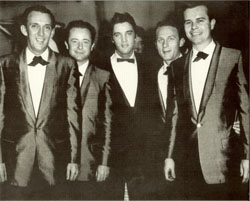
Gordon Stoker (shown second from the left in the above photo with Elvis) is the only one from that time still a member of The Jordanaires. The other early member is Ray Walker who joined in 1958.


Elvis on Television

By Roger Lee Hall


List of songs performed by Elvis on television in 1956 and 1957:

Stage Show (CBS TV, hosted by two Big Band musicians: Tommy and Jimmy Dorsey) 

Six appearances:

  •  January 28 - Tommy Dorsey introduced Cleveland disc jockey Bill Randle, who spoke about Elvis on his first national US TV appearance - Songs: "Shake, Rattle and Roll / Flip Flop and Fly" and "I Got A Woman"
  • February 4 - Songs: "Baby, Let's Play House" and "Tutti Frutti"
  •  February 11 - Songs: "Blue Suede Shoes" and "Heartbreak Hotel"
  •  February 18 - Songs: "Tutti Frutti" and "I Was the One"
  •  March 17 - Songs: "Blue Suede Shoes" and "Heartbreak Hotel"
  •  March 24 - Songs: "Money Honey" and "Heartbreak Hotel"  

The Milton Berle Show (NBC TV)

Two appearances:   

  •  April 3 - Songs: "Heartbreak Hotel" and "Blue Suede Shoes"
  •  June 6 - Songs: "Hound Dog" and "I Want You, I Need You, I Love You"

The Steve Allen Show (NBC TV)

One appearance:   

July 1 - Songs: "I Want You, I Need You, I Love You" and "Hound Dog"

The Toast of the Town (or The Ed Sullivan Show) (CBS TV)

Three appearances in 1956-1957: 

  •  September 9, 1956 - actor Charles Laughton not Ed Sullivan in New York introduced Elvis from Hollywood - Songs: "Don't Be Cruel"; "Love Me Tender"; "Ready Teddy"; "Hound Dog"
  •  October 28, 1956 - Ed Sullivan introduced Elvis - Songs: "Don't Be Cruel"; "Love Me Tender"; "Love Me"; "Hound Dog"
  • January 6, 1957 - Ed Sullivan introduced Elvis - Songs: "Hound Dog"/"Love Me Tender"/Heatbreak Hotel" (Medley); "Don't Be Cruel"; "Too Much"; "When My Blue Moon Turns To Gold Again"; "Peace in the Valley"

    In the booklet essay for the 3 DVD set, Greil Marcus writes that...

    "almost everyone says 'and then we saw him on Ed Sullivan.' NOBODY ever says they saw him on the Dorsey show, Milton Berle, or Steve Allen."

    Well, sorry Mr. Marcus, but I saw Elvis on ALL those TV shows in 1956-57.

    I watched him go from the rough and raw Memphis Flash to a slick and sexy "Electric Elvis."

    Those three famous Ed Sullivan shows are now available in the 3 DVD set -- the first two shows have Elvis in full frame, while the third program is "from the waist up"


Elvis Presley - Ed Sullivan Shows


Elvis - The Ed Sullivan Shows


Elvis at Christmas


Elvis: "BLUE CHRISTMAS"


Recommended Elvis Links


  Enter keywords...


Return to top of page


Contact
 

© 2006 - 2010 PineTree Productions. All Rights Reserved.
No pictures to be reproduced without permission.